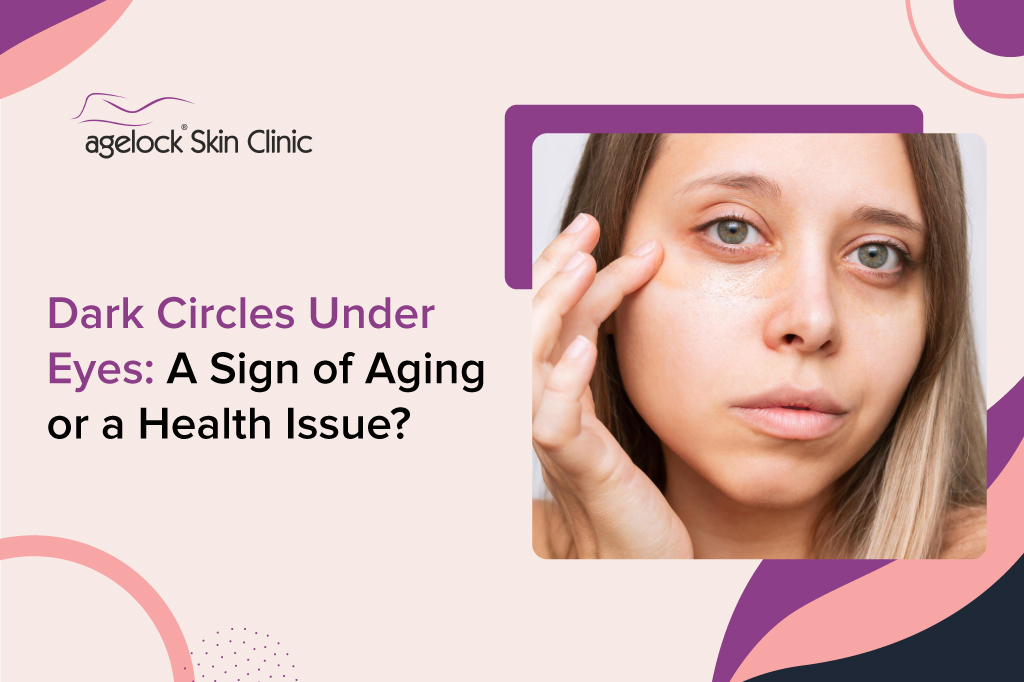
Treating dark circles starts with knowing what’s actually causing them, since pigmentation, volume loss and visible blood vessels each call for a completely different approach. A cream built for one won’t do much for another, which is usually why people cycle through products every few months with nothing to show for it.
According to Dr. Jagatjit Singh Kohli of Agelock Skin & Hair Clinic in Chandigarh, “Most patients have already tried several products by the time they come in. Usually the issue isn’t the product, it’s that pigmentation, volume loss and visible blood vessels are three separate problems, each needing its own fix.”
CTA: Not sure what’s causing your dark circles? Book an appointment.
What Are the Treatment Options for Dark Circles?
The right option depends entirely on what’s driving the darkness underneath.
Topical Treatments: Vitamin C and retinoid serums can fade mild pigmentation over a few weeks of regular use. Shadows caused by volume loss won’t respond to these no matter how long you stick with them.
Chemical Peels: A light peel targets melanin directly and works well for pigmentation specifically. It does little when hollowing rather than melanin is behind the darkness.
Dermal Fillers: Hyaluronic acid fillers rebuild lost volume and soften the hollow creating the shadow. This tends to be the main driver behind cases that don’t respond to creams.
Laser Therapy: Visible vessels sitting close to thin skin, or pigmentation that hasn’t shifted with topicals, usually need laser treatment to reach depths creams simply can’t.
A proper Dark Circle Treatment in Chandigarh plan may combine more than one of these treatments once the underlying cause is identified.
How Do You Know Which Dark Circle Treatment Is Right for You?
Most cases fall into one of three categories and that category ends up deciding the treatment.
Pigmentation-Related Circles: A brown tone that worsens with sun exposure or rubbing usually responds well to topicals and peels given enough time.
Volume Loss and Hollowing: When it’s really a shadow rather than discoloration, a simple flashlight check can confirm this, fillers tend to make more sense than any serum would.
Vascular or Bluish Circles: Thin skin letting blood vessels show through below typically calls for laser therapy, since brightening creams won’t change what’s happening beneath the surface.
Professional Diagnosis: It’s fairly common for two of these categories to overlap in the same person. That overlap is exactly why guessing at home rarely gets people the result they’re hoping for.
Wondering whether your dark circles come down to aging or something else going on underneath? This piece on dark circles under eyes: a sign of aging or a health issue looks at that distinction more closely.
Why Choose Dr. Jagatjit Singh Kohli for Dark Circle Treatment?
Dr. Jagatjit Singh Kohli, an MBBS, DHMS-Harvard, with a Masters in Clinical Dermatology, approaches dark circle cases at Agelock Skin & Hair Clinic Chandigarh by first identifying whether pigmentation, volume loss or vascularity is responsible, rather than reaching for a generic recommendation. That distinction matters most for patients who’ve already tried several products without success, where the wrong path can waste months without touching the real cause.
For anyone searching for the best dermatologist for dark circles near me, the question worth asking is whether a clinic diagnoses before it treats. Call +91 98787 62626 to book your consultation.
Frequently Asked Questions
Can dark circles be permanently removed?
In many cases, yes, lasting improvement is realistic, though it really does depend on what’s causing the darkness and which treatment gets chosen.
Do dark circles mean I’m not sleeping enough?
Not necessarily, and this is actually a common misconception, since genetics and natural volume loss account for a fairly large share of cases that have nothing to do with sleep at all.
Are under-eye fillers safe?
For the most part, yes. A trained professional picking the right product for that specific patient is really what determines the outcome here, more than the filler itself.
How soon will treatment show results?
It depends on the route. Topicals need a few weeks before you’ll notice much, but fillers and laser sessions move faster, sometimes within days rather than weeks.
References:
- PMC (NCBI) — Periorbital Hyperpigmentation: A Comprehensive Review: https://pmc.ncbi.nlm.nih.gov/articles/PMC4756872/
- PMC (NCBI) — Real-World Evidence on the Routine Use, Efficacy and Safety of a Hyaluronic Acid-Based Dermal Filler in the Periorbital Region: https://pmc.ncbi.nlm.nih.gov/articles/PMC12423213/
Disclaimer: This blog is for educational purposes only and isn’t a substitute for a dermatologist’s evaluation. Persistent or worsening dark circles should be assessed by a professional before starting any treatment.