
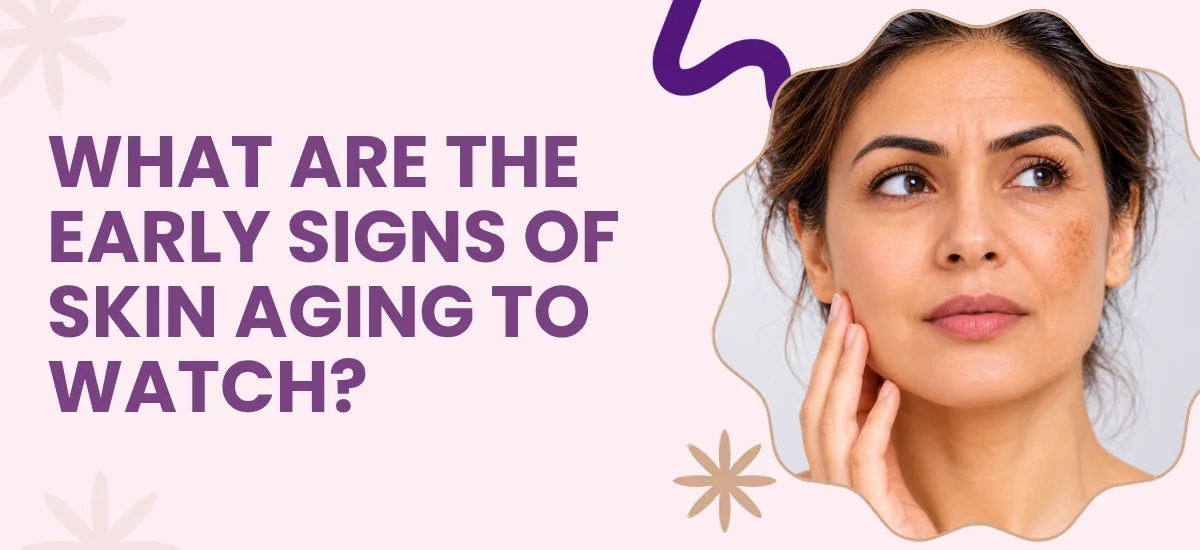

Skin doesn’t age all at once. The first changes arrive in the mid-to-late 20s, as collagen production starts to taper, and they’re mild enough that most people blame a late night. Think of a faint line near the eye or a slightly flat complexion. Easy to overlook. But catching these early signs of skin aging gives you more room to slow them.
According to Dr. Jagatjit Singh Kohli of Agelock Skin & Hair Clinic in Chandigarh, “Early skin aging shows up in texture and tone well before wrinkles do. Skin catches light differently, settles more slowly after a pinch and loses some evenness of colour. Spotting this pattern early makes it easier to slow.”
Unsure what your skin is showing you? A dermatologist can separate what’s normal from what’s worth tracking. Enquire Now
What Are the Early Signs of Skin Aging?
Early skin aging brings small changes that are easy to miss. Most people spot them around the eyes first, under a bathroom light or in a phone camera.
Fine Lines: They show at the outer corners of the eyes and between the brows, mostly when you squint at a screen, and they linger a little after the expression goes.
Dullness and Rough Texture: Your face looks a bit flat even after a decent night’s sleep, and foundation catches on patches that never bothered you before, because dead cells clear off more slowly.
Uneven Tone and Sun Spots: A few small brown spots on the cheeks or backs of your hands, or a tan that won’t even out, are what years of sun leave before any wrinkle.
Loss of Firmness: Press a fingertip into your cheek and see how long it takes to bounce back. If it’s slower than you remember, collagen and fat are thinning. Gradual, but real.
These changes rarely need treatment on their own. If they progress, a dermatologist can discuss anti-aging treatment in Chandigarh.
What Causes Skin to Age Early?
Aging depends partly on genetics and partly on lifestyle. Sun, air and sleep over the years are the factors you can influence.
Natural Collagen Slowdown: Just slightly lower output each year from the late 20s, so a friend your age can look years ahead or behind you.
Sun Exposure: Picture the side of your face next to the car window on a daily commute. That side often shows age first. Years of it, adding up.
Smoking and Pollution: Smokers often get lines around the mouth and a greyish tone sooner, and heavy city air has been linked to uneven tone.
Poor Sleep and High Stress: After a week of late nights, the area under the eyes gives it away first. Long stretches of stress add to it through inflammation.
Dark circles are often blamed on tiredness, but age can be a cause too. This piece on under-eye dark circles explains how to tell the difference.
What Helps Once You’ve Spotted the First Signs?
Simple daily habits are usually enough at this stage. They’re dull, but they work.
Daily Sunscreen: The one that matters most, and the one people skip on cloudy days. UV reaches you anyway, so SPF 30 or higher goes on every morning.
A Retinoid at Night: Retinol nudges cell turnover along and helps collagen, but skin needs time to adjust. Some early dryness and peeling is common, so start two or three nights a week.
Antioxidants and Moisturiser: Vitamin C in the morning adds a little protection. A plain moisturiser keeps the barrier calm and smooths lines that are really just dryness.
Skip the Harsh Fixes: Scrubbing and layering five new products the moment you spot a line backfires, because a stripped barrier looks dull and makes skin look older.
Retinol is worth understanding properly, since it needs careful use. This piece on retinol for hyperpigmentation explains what it can and can’t do.
Key Takeaways: The first signs of skin aging are usually small, such as fine lines, a flatter surface and a few new brown spots, starting in the mid-to-late 20s. Sun speeds them up most, and daily sunscreen does more than any single product.
Frequently Asked Questions
When does skin aging actually start?
Collagen slows from the mid-to-late 20s, though changes usually show in the early 30s.
What do people usually notice first?
Fine lines near the eyes, duller skin, or a few new brown spots.
Can you slow it down?
Yes. Daily sunscreen, not smoking and a simple routine you’ll stick to help the most.
When is it worth getting a skin check?
When something changes quickly, or a spot grows, bleeds or shifts colour.
References:
Disclaimer: This blog is for general education purposes only.