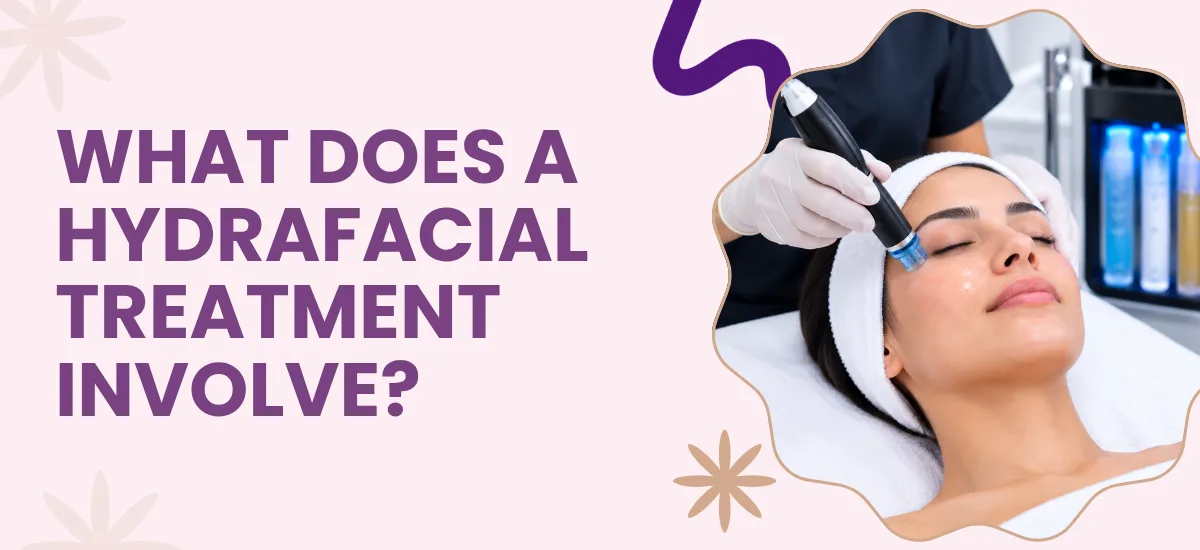

A HydraFacial isn’t one step. It’s a full sequence, and one device runs the whole thing. That device uses a patented vortex-fusion system to move through cleansing exfoliation extraction and hydration in a single sitting, working on overall skin health rather than chasing one concern at a time.
According to Dr. Jagatjit Singh Kohli of Agelock Skin & Hair Clinic in Chandigarh, “This isn’t a regular facial with better marketing. The device handles exfoliation and extraction mechanically, which makes it far more consistent than manual technique. What actually changes the outcome is picking the right serum for that person’s skin.”
Curious what a HydraFacial session actually looks like? Book an appointment.
What Are the Steps Involved in a HydraFacial Treatment?
Four stages make up a session. Same device the whole way through.
Cleansing and Exfoliation: Dead skin cells and surface debris get lifted away first. Everything after this works better on a clean surface.
Acid Peel: A gentle blend of glycolic and salicylic acid loosens buildup inside the pores. No redness or downtime the way a stronger peel would cause.
Extraction: Vacuum suction pulls out trapped oil and debris painlessly. It’s far more consistent from session to session than manual extraction.
Hydration and Serum Infusion: Hyaluronic acid peptides and antioxidants go straight into the skin here. The session ends on a plumped hydrated note.
A Hydrafacial treatment in Chandigarh usually runs 30 to 45 minutes with no downtime.
What Skin Concerns Does a HydraFacial Address?
One skin type doesn’t define this treatment. It adjusts to whatever’s actually going on.
Dull or Uneven Skin: Exfoliation paired with antioxidant infusion tends to bring the glow back within a session or two.
Clogged Pores and Acne-Prone Skin: Suction-based extraction reaches debris a cleanser can’t touch, and it does that without the irritation manual extraction sometimes leaves behind.
Fine Lines and Early Aging: Peptide-rich serums support skin texture over repeated sessions. This works better as maintenance though, not as a fix for deep wrinkles.
Sensitive Skin: No physical scrubbing is involved here, which makes it one of the gentler options for skin that reacts easily to other treatments.
A regular facial and a HydraFacial aren’t interchangeable, even though they sound similar. This comparison on Benefits of Hydrafacial vs Regular Facial breaks down exactly where the two diverge.
Why Choose Dr. Jagatjit Singh Kohli for HydraFacial Treatment?
Dr. Jagatjit Singh Kohli, MBBS, DHMS-Harvard, with a Masters in Clinical Dermatology, oversees HydraFacial treatment at Agelock Skin & Hair Clinic Chandigarh. Serum selection here comes from an actual clinical assessment of each patient’s skin, not a fixed protocol applied to everyone who walks in. That distinction changes outcomes, since the same device produces very different results depending on how the plan gets customized.
Patients searching for a hydrafacial dermatologist near me are usually after exactly that kind of clinical customization, not a generic spa version of the treatment. Call +91 98787 62626 to book your consultation.
Frequently Asked Questions
How long does a HydraFacial session take?
Roughly 30 to 45 minutes from start to finish. You walk out right after, no waiting around for anything to settle.
Is a HydraFacial painful?
Far from it, most patients call it relaxing. Even the extraction step, which usually causes some discomfort elsewhere, barely feels like anything here.
How often should I get a HydraFacial?
A four to six week gap tends to be the sweet spot. It lines up nicely with how long skin actually takes to renew itself between sessions.
Can HydraFacial help with acne?
It can, particularly with mild to moderate breakouts where clogged pores are doing most of the damage. But if the acne is active and inflamed, that needs its own assessment before jumping into this.
References:
- PMC (NCBI) — Skin Resurfacing Procedures: New and Emerging Options: https://pmc.ncbi.nlm.nih.gov/articles/PMC4155739/
- PMC (NCBI) — Combining Diamond-Tip Dermabrasion Treatments and Topical Skincare in Participants with Dry, Hyperpigmented, Photodamaged or Acne-Prone/Oily Facial Skin: A Clinical Usage Study: https://pmc.ncbi.nlm.nih.gov/articles/PMC10540789/
Disclaimer: This blog is for educational purposes only and isn’t a substitute for a dermatologist’s evaluation. Active acne, sunburn or broken skin should be assessed by a professional before undergoing any facial treatment.