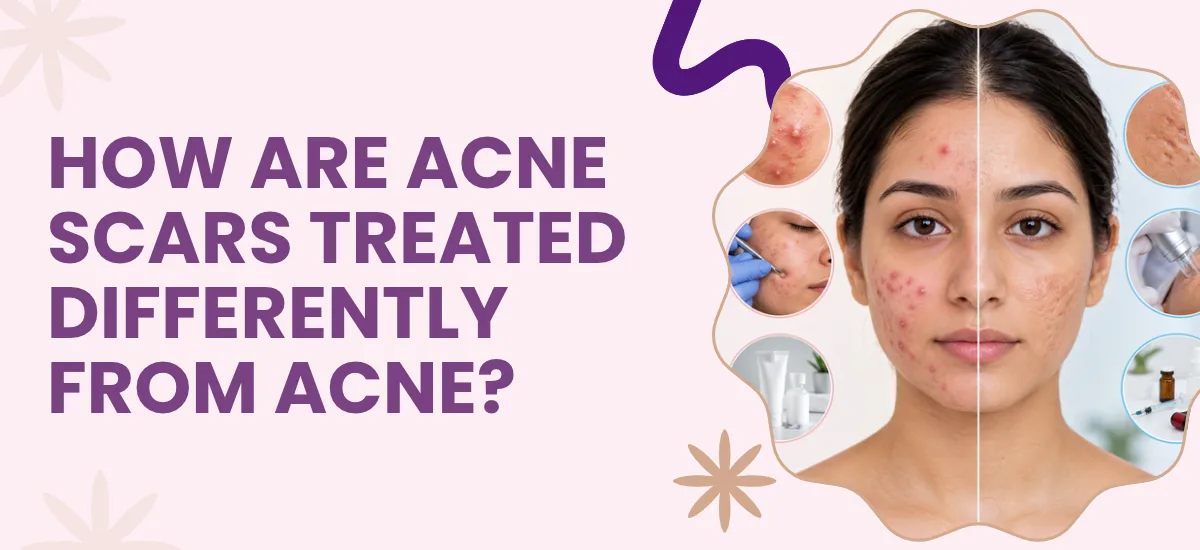

Acne and acne scars get treated differently because they sit in different layers of the skin. Acne is active trouble inside the pore. A scar is damage that stays in the deeper skin long after the pimple has gone. Acne scar treatment normally waits until the breakouts have settled.
According to Dr. Jagatjit Singh Kohli of Agelock Skin & Hair Clinic in Chandigarh, “A scar is where the skin lost some of its structure, and no cream fully fills that gap back in. That’s why scars need procedures that rebuild collagen, while acne mostly responds to medicines. Using the wrong one wastes months.”
Not sure whether you’re dealing with acne or scars? Enquire Now
How Do Acne and Acne Scars Differ?
They can sit on the same cheek. But they’re different problems: acne is active inflammation in the pore, while a scar is what’s left once that inflammation has done its damage.
What’s Being Treated: With acne, it’s the blocked pore, excess oil and bacteria. With a scar, there’s no pore problem left to fix. Treatment goes after the tissue that was damaged.
Which Layer Is Involved: Acne starts in the follicle and shows near the surface. Scars form deeper, in the dermis, the layer packed with collagen that gives skin its firmness. That’s why surface treatments rarely reach it.
What Success Looks Like: Acne treatment aims for fewer new breakouts. For scars, it’s smoother skin, which means rebuilding collagen over several months. Nothing about it is quick.
Timing: Scar procedures usually begin once acne is quiet. Otherwise new scars can form as fast as the old ones are treated.
A proper acne scar treatment in Chandigarh plan starts by checking whether a mark is a true scar or just flat discolouration, since the two are treated differently. And most people only ask about it once the acne has finally gone.
How Is Active Acne Treated?
Acne treatment goes after the pore itself. The aim is to open blocked pores, calm the redness and keep bacteria in check.
Topical Medicines: Mild to moderate acne usually starts with creams or gels. A retinoid keeps pores from clogging, benzoyl peroxide cuts bacteria and azelaic acid eases redness. Judge them after about two months, not two weeks.
Oral Medicines: Moderate to severe acne often needs tablets too. That might be an antibiotic course, hormonal treatment for some women or isotretinoin for stubborn nodular acne. None are over the counter, and all need regular check-ins.
Light Peels: A mild salicylic or glycolic peel loosens plugs sitting near the surface. It helps the medicines along but won’t clear active acne alone.
Time and Consistency: Acne medicines are slow. Miss a week and breakouts can creep back, and each one raises the chance of a scar. Most plans run for months.
Controlling acne early is the surest way to avoid scars. For more on medicines, peels and home care, see this guide to affordable acne treatment options in Chandigarh.
How Are Acne Scars Treated?
Scar treatment starts with shape and depth. A dermatologist names your type first, and most acne scar treatment then spreads over several sessions.
Rolling Scars: Soft, shallow dips that make the skin look wavy, because fibrous bands hold it down from below. Microneedling and subcision, which releases those bands, usually lead the plan. Three to six sessions is typical.
Boxcar Scars: Wider dents with straight, sharp edges, as if a small stamp had been pressed in. Fractional laser or microneedling often does the job, though deeper ones may need subcision or fillers on top. Sessions usually fall a month apart.
Ice Pick Scars: Tiny, deep holes, narrow like a pin prick. Creams and surface treatments can’t reach the bottom, so a dermatologist uses targeted methods such as TCA CROSS or punch techniques. These are the hardest scars to improve.
Raised Scars: Thick, firm bumps, more common on the chest, back and jawline. These respond to steroid injections, silicone sheets or laser, and resurfacing alone won’t fix them. Starting early helps.
Flat brown marks left by acne aren’t scars at all. They’re pigmentation, and this guide on how acne pigmentation is treated explains that separate route.
Key Takeaways: Acne is trouble inside the pore, and a scar is damage left in the deeper skin. Acne mostly settles with medicines, but scars usually need procedures that rebuild lost structure. The scar’s shape, whether rolling, boxcar, ice pick or raised, picks the method. Getting acne under control first stops fresh scars from forming on top of old ones.
Frequently Asked Questions
Will creams alone get rid of acne scars?
Creams can fade flat marks but won’t lift a dent. Dents need microneedling, laser or subcision, and raised scars need injections or silicone.
Should I treat acne or scars first?
Acne first. Scar procedures work best once breakouts are controlled, or new scars can form while old ones are being treated.
How many visits does acne scar treatment involve?
Expect three to six sessions, usually a few weeks apart. Deeper scars may need more.
Can acne scars go away completely?
Not usually. Most scars become far less noticeable, though a slight change in texture often stays.
References:
Disclaimer: This blog is for educational purposes only and isn’t a substitute for a dermatologist’s evaluation. Scars that are raised, painful or spreading should be examined by a doctor before treatment.