
The hair follicle is where acne begins. It’s the narrow channel holding each hair and its oil gland, and excess oil, dead skin cells and a bacterium called Cutibacterium acnes can clog it. The skin around the blockage may then redden and swell, and how far that goes decides the type of acne and which acne treatment fits.
According to Dr. Jagatjit Singh Kohli of Agelock Skin & Hair Clinic in Chandigarh, “A lot of patients blame dirty skin and scrub their faces harder. That usually makes acne worse. Acne starts deep inside the pore, so the useful question is which type you have.”
Not sure which type of acne you have? Enquire Now
What Are the Different Types of Acne?
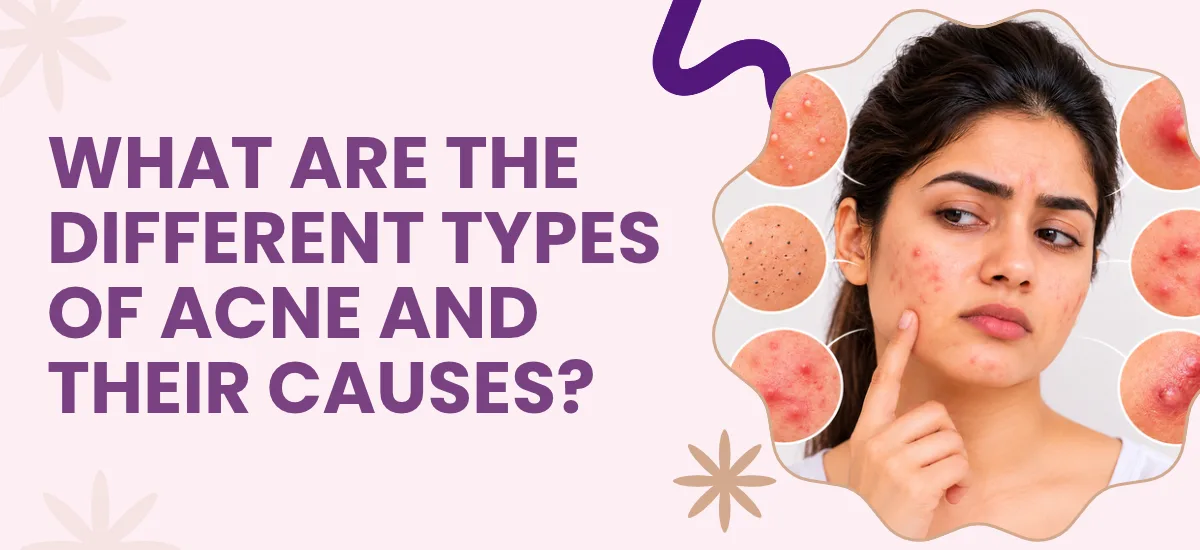
Acne sorts into two groups. In the first, pores simply clog. In the second, the skin also swells, reddens and starts to hurt.
Blackheads: Tiny dark specks, most common across the nose and chin. The pore stays open, and the plug inside turns dark once air reaches it. Dirt isn’t the reason.
Whiteheads: Small white or flesh-toned bumps that sit flat or slightly raised. The pore has sealed over, so the plug can’t escape and the bump may linger for weeks.
Papules and Pustules: The pimples most people recognise. A papule is a small red bump, sore when pressed. Once a white or yellow tip of pus appears, it’s a pustule. Picking either one often leaves a mark.
Nodules and Cysts: The severe end. Nodules are hard, painful lumps that sit well below the surface. Cysts are softer and hold pus. Either can leave a scar, so neither should be squeezed or left untreated.
Having more than one type at a time is common, such as blackheads across the nose and a few pustules on the cheeks. Each calls for a different approach, so a proper acne treatment in Chandigarh plan starts by working out what you actually have.
What Causes Acne?
Four things drive most acne, and they tend to overlap. A treatment usually targets one or two of them.
Excess Oil: Sebum is the skin’s natural oil, and the glands make extra when hormones rise. Oilier skin has more material available to block a pore.
Dead Skin Cells: The cells lining a pore normally shed one by one without anyone noticing. In acne they come away unevenly and stick together. That clump plugs the pore and shuts the oil in.
Bacteria and Inflammation: Cutibacterium acnes lives on most people’s skin and does no harm. Once a pore is blocked it multiplies. The body’s response to that is the redness, swelling and pus. That’s why antibiotics sometimes feature in treatment.
Hormones: Androgens, which climb during puberty, speed up oil production. Periods, pregnancy and PCOS can shift hormones in a similar way, and that’s often why adults still break out.
Knowing the cause narrows down the treatment choices. For what dermatologists recommend, and what you can try at home, see this guide to affordable acne treatment options in Chandigarh.
What Else Can Trigger or Worsen Acne?
Beyond those four, some everyday things can set off a breakout. A few you can change, and a few you can’t.
Stress: Stress hormones push the oil glands into making more sebum, which is why breakouts often follow exams or a rough month at work. Stress alone won’t cause acne. But it can flare acne that’s already there.
Diet: Studies show only a loose connection, and it varies between people. A few people notice flare-ups after sugary food or milk. Cutting those foods may help a little, though it won’t stand in for treatment.
Skincare and Habits: Heavy makeup and rich creams can clog pores, so look for the word non-comedogenic on the label. Picking and hard scrubbing inflame the skin and raise the odds of marks. Most people only start reading labels after a bad month.
Genetics and Medicines: Acne often runs in families. Certain medicines can trigger it too, including steroids and some hormonal drugs, so give your doctor a full list of what you take.
Deep, painful acne is the kind most likely to scar, so it’s worth showing a doctor early. Once the acne settles, any dents left behind are a separate problem, and acne scars treatment in Chandigarh deals with them.
Key Takeaways: A blocked pore is where acne starts, usually with oil, dead skin cells and bacteria. Blackheads and whiteheads are the mildest types, and nodules and cysts are deeper and likelier to scar. Oil, clogged pores, bacteria and hormones cause most acne, while stress, skincare habits and family history can add to it. Anything painful or deep is worth a doctor’s visit before it leaves marks.
Frequently Asked Questions
What are the main types of acne?
The mildest are blackheads and whiteheads. Red pimples come next, as papules and pustules, and nodules and cysts are the deepest and most likely to scar.
Does dirty skin cause acne?
No. The trouble starts inside the pore, and extra scrubbing just irritates the skin.
Why do adults still get acne?
Changing hormones are the usual reason, from periods, pregnancy or conditions like PCOS. Some medicines, and stress, can also play a part.
When should I see a doctor about acne?
When it’s painful, deep or leaving marks, or when home products haven’t helped after a couple of months. Early care lowers the risk of scarring.
References:
Disclaimer: This blog is for educational purposes only and isn’t a substitute for a dermatologist’s evaluation. Painful, deep or persistent acne should be examined by a doctor before treatment.