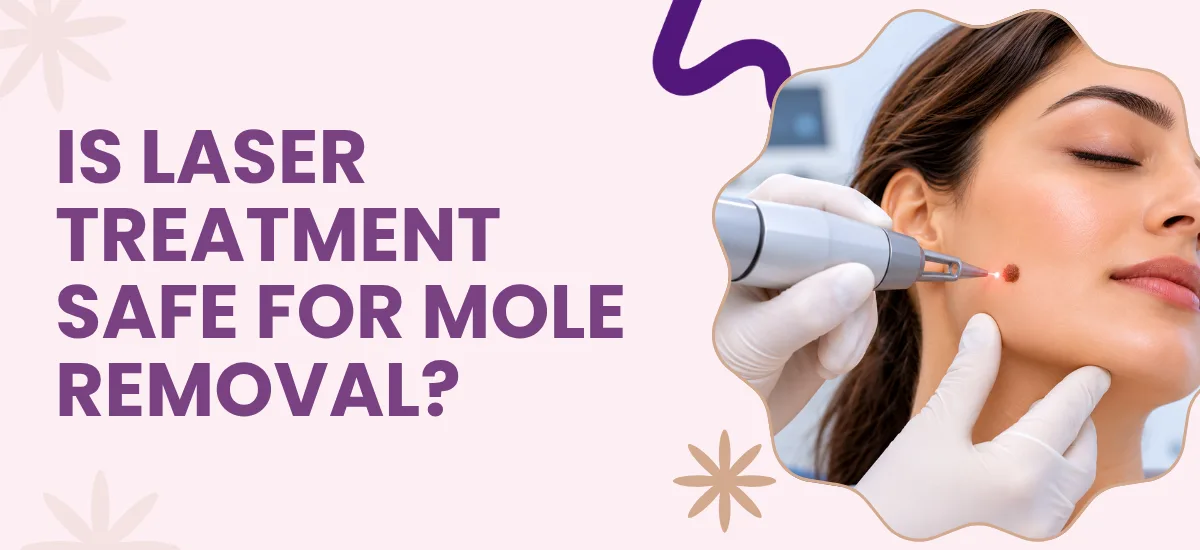

A trained professional can safely remove a small, flat mole with a laser, but only after it’s been confirmed harmless. Raised moles, deep ones and anything that looks suspicious need a different approach as laser usually isn’t the right tool for them.
According to Dr. Jagatjit Singh Kohli of Agelock Skin & Hair Clinic in Chandigarh, “The laser usually isn’t the worry. What worries me is a mole nobody has examined. Once it’s vaporised, there’s no tissue left to look at under a microscope, so the check comes first.”
Not sure whether your mole is suitable for laser removal? Enquire Now
Which Moles Are Suitable for Laser Removal?
Whether laser works for a mole depends on two things: how it looks, and how far down it goes. Only an examination can answer both, and it should happen before any treatment is booked.
Small and Flat Moles: These are the usual candidates. A flat, light brown mole sits near the surface, so the laser never has to go deep.
Moles With a Stable History: Think back. If the mole looked the same five years ago, that’s reassuring. One that darkened or grew recently needs a closer look first.
Confirmed Benign Diagnosis: A dermatoscope is a small handheld magnifier with its own light, and the dermatologist uses it to inspect the mole’s pattern and colour. If anything looks off, laser is ruled out.
Cosmetic Reasons Only: It’s an appearance related treatment. People often consider removal when a mole catches on a razor, rubs against a collar or is difficult to cover with makeup.
The examination helps the dermatologist choose between laser, cryotherapy and surgical excision. This assessment guides the approach to mole removal in Chandigarh.
What Are the Risks of Laser Mole Removal?
Problems are fairly uncommon when a suitable mole is treated by someone trained. But they do happen, so it’s worth knowing the four that matter most.
Scarring or Pigment Change: The spot may heal paler or darker than the skin around it. Deeper moles are likelier to leave a faint scar, particularly on darker skin.
Mole Returning: The laser works from the top down, so cells deeper in the skin can survive and slowly rebuild the mole. If dark pigment reappears, get it checked.
Infection and Slow Healing: Expect a small raw spot for the first few days. Picking at the scab, or letting the area get dirty or sweaty, is how an infection gets in.
Missed Warning Signs: The most serious risk. A mole that nobody examined could turn out to be an early skin cancer, and by then the laser has already destroyed the evidence.
Aftercare for laser treatments overlaps quite a bit, from sunscreen to gentle cleansing, though a mole spot also needs the scab left intact. This piece on what to expect during laser hair removal covers it.
How Should You Prepare for and Recover From Laser Mole Removal?
There isn’t much to prepare. What you do in the two weeks before and after has more effect on the result than most people expect.
Get the Mole Examined First: Book the dermatoscope check before anything else. Uneven edges, several shades in one mole or any recent change mean testing comes before laser. A dated photo helps you track changes.
Keep the Area Out of the Sun: Fresh tan raises the odds of pigment changes afterward. Stay out of the sun, and off the tanning bed, for about two weeks beforehand.
Care for the Scab Properly: Keep your hands off the scab. Most scabs drop away within one to two weeks, leaving pink skin that fades with time. Wash gently around it and let the skin do the rest.
Protect the Skin Afterward: Apply SPF 30 or higher to the healing area once advised by your dermatologist, and use a hat or protective clothing when outdoors. Sun exposure during healing is the usual reason a dark patch forms. Most people only learn that after the first mark appears.
Anyone searching for laser treatment for moles near me should expect a skin examination before any method is suggested. This guide on what to ask a clinic before laser treatment lists what’s worth asking about equipment, qualifications and costs.
Key Takeaways: Laser suits small, flat moles that a doctor has already checked. Anything raised, deep, changing or suspicious needs a proper exam first, and usually surgery plus a lab test. Scars, colour changes and regrowth can happen, mostly with deeper moles. Which laser is used matters less than whether the mole was examined.
Frequently Asked Questions
Is laser mole removal painful?
Not much. A numbing cream or injection takes care of most of it, and what’s left is a quick sting or warm prickle.
Does laser mole removal leave a mark?
Often only a faint pink patch that fades over a few weeks. Deeper moles are more likely to leave a lasting scar or a change in skin colour.
Can any mole be removed with a laser?
No. Raised, deep, changing or suspicious moles need a doctor’s examination first and are usually removed surgically so the tissue can be tested.
Can a mole grow back after laser removal?
Sometimes. If pigment cells were left below the treated layer, the mole can return and should be looked at again.
References:
Disclaimer: This blog is for educational purposes only and isn’t a substitute for a dermatologist’s evaluation. Any mole that changes or bleeds should be examined by a doctor before treatment.